One of the greatest misconceptions within spiritual philosophy is the belief that consciousness evolves by discovering a single ultimate truth. Throughout history, different traditions have proposed different destinations. Some have placed enlightenment above all else, others have celebrated suffering as the gateway to wisdom, while many have sought transcendence through love, discipline or devotion. Each approach captures an important aspect of human development, yet none fully explains why consciousness continues evolving even after these milestones have been reached.
Perhaps evolution has never been about finding the highest principle. Perhaps it has always been about understanding the purpose of every principle and recognising the moment when each has completed its work.
Consciousness does not mature by escaping one force and replacing it with another but by learning how each force contributes to its development without allowing any of them to become its permanent identity.
The Necessary Descent
Every meaningful transformation begins with a period of dissolution. There comes a point when established beliefs, familiar identities and long-held certainties begin to lose their stability. What once provided direction gradually becomes insufficient, forcing consciousness into a confrontation with uncertainty. This experience has often been described as the Abyss.
The Abyss represents far more than pain or psychological struggle. Its function is to dismantle structures that no longer support further development. Attachments become visible because they begin breaking apart. False certainty gives way to genuine inquiry. The personality discovers the difference between the roles it has learned to perform and the deeper awareness capable of observing those roles.
Remaining within the Abyss, however, prevents further movement. The purpose of dissolution is transformation rather than permanence. Once consciousness has recognised the limitations of its previous identity, another stage naturally begins to emerge.
The Gift and Burden of the Light-Bringer
Illumination is one of the most powerful experiences available to human consciousness. Patterns suddenly become visible where confusion once existed. Knowledge begins connecting itself into a coherent structure. The individual develops the ability to perceive relationships that previously remained hidden, creating the profound feeling that reality has become more transparent than before.
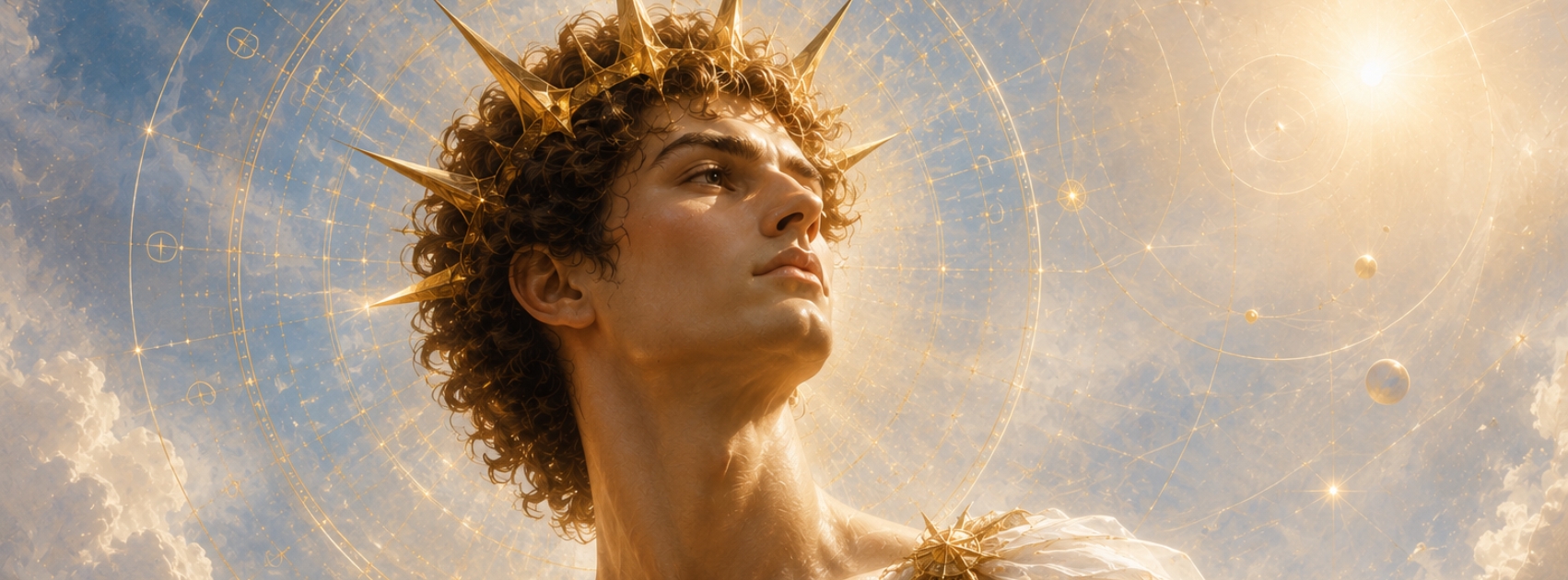
The ancient name Lucifer, meaning Light-Bringer, symbolises this stage remarkably well. Before centuries of theological interpretation surrounded the name, it described the arrival of light before sunrise. Psychologically, it represents the awakening of perception itself. Consciousness begins carrying its own light instead of relying entirely upon external authority.
Yet every evolutionary achievement introduces a new challenge.
Illumination strengthens awareness, although it also strengthens the possibility of identifying with awareness. Knowledge can quietly become superiority. Independence can gradually become isolation. The individual who once sought truth may eventually begin protecting an image of being the one who possesses it. Pride rarely appears as obvious arrogance. More often it develops through certainty, intellectual attachment and the subtle belief that one has reached a final understanding.
The Light-Bringer therefore fulfills two functions simultaneously. It liberates consciousness from ignorance while revealing one of the final disguises of the ego.
The Intelligence of Relationship
Perhaps the greatest mistake made by both philosophy and spirituality has been the search for the supreme archetype. Every school eventually elevates one principle above the rest, treating it as the foundation from which everything else should be understood. Reality consistently demonstrates something far more intricate.
Life itself functions through cooperation. Every organ within the body performs a specialised task while remaining dependent upon the existence of every other organ. Every ecosystem survives because countless different processes operate together without competing for supremacy. The universe expresses itself through relationship rather than hierarchy.
The psyche follows the same principle. Darkness exposes what light cannot reveal. Illumination makes visible what darkness has uncovered. Order provides continuity while change prevents stagnation. Discipline shapes potential into expression while imagination prevents discipline from becoming mechanical. Each force contributes something essential because consciousness requires every one of them at different stages of its evolution.
The question therefore changes completely. Instead of asking which archetype deserves the highest position, consciousness begins asking what each archetype exists to accomplish.
The Aquarian Perspective
This broader perspective reflects one of the deepest qualities associated with Aquarius. The sign is frequently described through innovation, individuality and unconventional thinking, yet its most significant contribution lies elsewhere. Aquarius understands systems. It recognises that the whole can never be understood by examining isolated parts alone.
As consciousness develops this perspective, power itself begins changing its nature. Strength no longer depends upon domination because domination assumes separation. Genuine authority emerges through understanding how apparently opposing forces contribute to a single living process. Every archetype becomes a participant within a larger intelligence rather than a rival competing for control.
This represents a profound shift in the evolution of awareness. Identity gradually stops forming around individual experiences, beliefs or achievements. Instead, it begins recognising the underlying consciousness capable of moving through all of them.
The Mastery of Consciousness
Perhaps self-mastery never meant to conquer darkness or to achieve permanent illumination. Both experiences remain essential because each reveals something the other cannot. The journey through the Abyss exposes illusion, while the Light-Bringer awakens perception. Their value lies in the transformation they produce rather than the identities they offer.
The mature individual eventually discovers that every archetypal force has fulfilled a specific purpose.
- Darkness has taught resilience.
- Illumination has expanded awareness.
- Pride has revealed the final attachments of the ego.
- Cooperation has demonstrated that no force exists independently from the greater whole.
Consciousness gradually learns to work with each of these principles without becoming defined by any of them. Perhaps this is where genuine freedom begins.
The evolution of consciousness does not culminate in identifying with the Abyss, nor does it end with identifying with the Light-Bringer. Both belong to a larger architecture whose purpose is the gradual emergence of a consciousness capable of recognising every force, understanding every stage and remaining centred throughout them all.
The highest expression of awareness may therefore have little to do with becoming greater than any archetype. Its true achievement may lie in understanding the rightful place of every archetype within the unfolding evolution of the Self.
~Sophia Gaki
Astraea Evolutionary Astrology
~~~~~~
~~~~~~

Leave a Reply